Pages

Sunday, January 8, 2012

My wish to live the sweet life

I wish I were a 35-year-old woman with a baby. That’s right: female, 44% of the way through my life, and with an infant in my care. I’ll explain why.

35-year-old women with babies have the easiest lives in the world. A 35-year-old woman with a baby can spend hours on end at work talking with other 35-year-old women with babies about what it’s like to be a 35-year-old woman with a baby. As long as there are enough managers in the company who were once themselves 35-year-old women with babies, nobody minds that she’s wasting company time. In fact, it’s almost encouraged. But if a childless 25-year-old guy like me spends hours on end innocently drinking tea while staring out the window, he gets in trouble.

Being a 35-year-old woman with a baby is a Get-Out-of-Any-Situation-Free card. Feel like leaving work early? Just say the baby has a “doctor’s appointment” (wink, wink). Show up late or forget an appointment entirely? Blame it on the forgetfulness that plagues all 35-year-old women with babies. Finding yourself bored at a party? Just pretend the babysitter is calling your cell phone, and say there’s a problem with the baby. Pulled over for speeding? “Sorry, officer, I was just rushing home to be with my baby. And as you can see, I’m a 35-year-old woman.” Bam, no ticket. 

Being a 35-year-old woman with a baby would make it easier to write this blog, too. I could just write about whatever the hell was going on with the baby, and there would be a ready-made market of other 35-year-old women with babies ready to make my blog the next hot thing. What I fed the baby today—blog post. How to deal with spit-up stains—blog post. What kind of pants I’m trying to find for my one-year-old—1000 words in a cinch. The damn thing would write itself. And they would love it. I could call it Tammy’s Supermom Blog.

Instead I have to try to pull ideas out of thin air like a schmuck. Society is unfair.

A one-year free trial

Last spring the English department at my alma mater invited me to come talk with students at a couple of events about finding work after graduation. I’m not sure I had much help to offer. Describing job search strategies is hard: “Uh, look in the classifieds and be persistent?” That’s about the greatest wisdom I can offer.

The event I’d rather speak at (if they ever had it) would be one about how to live after getting a job. There’s a lot more to say about that. When you’re looking for work, it seems like having a job will solve everything. What a relief it would be! But getting a job is actually the easier part. It’s once you’ve been hired that you have to start making difficult decisions.

If I could give one piece of advice to grads just entering the adult workforce, it would be this: don’t buy anything for the first year. That doesn’t mean they should deprive themselves of things they truly need. It just means they shouldn’t go spending fun money or trading up for a drastically more expensive lifestyle. This should go without saying for those who have serious debt, but it’s true even for those graduating debt-free.  Spending money is a seductive trap that a lot of newly employed people fall into. 

The reason I would say not to buy anything for the first year is because the first year in a job (especially when it’s your first real job out of college) should be a trial period. One year is about how long it takes to see what the job is really like. If it starts out good, it might get bad. If it starts out bad, it might get good. The point is that it will probably take about a year to decide whether to stick with the job or dump it. 

I’ll generalize my own experience to say that most college kids entering their first professional jobs don’t give much serious thought to how long they actually want to be there. Once they have the job, they aren’t thinking about what they truly want or what it will take to find what they want. They’re just looking at a job that’s “good enough” and that enables them to begin living a bit better.

And that’s where the mistakes start. A recent grad who’s been living in penury for four years can hardly resist the temptation to go out and spend. I remember in my last few weeks of school running into an acquaintance as she was on her way to the Career Services Center. She was getting some help on preparing a resume. She asked me what I was doing after graduation, and I said I had already been hired for a “real job.” With a sort of sad, envious expression, she said, “You’ll be able to buy anything you want.” 

That probably sums up the feelings of a lot of recent grads and grads-to-be. Finally having a job with a decent paycheck is exciting. But every non-essential purchase amounts to committing to the job for just a little longer. For those who’ve found a job they love, this isn’t a problem. But most new workers probably don’t really know how they feel about a job until after 12 months or so. Some might find themselves desperately wanting to quit after a year, but afraid to do so because they have no savings—and an apartment full of stuff they bought without considering the consequences.

Most people would probably want to have a little cash saved up before quitting a job—either as a safety net or as a fund to go traveling, start a business, sit around and think, etc. So even if buying stuff doesn’t mean going into financial debt, it still means going into freedom debt. You have to work off the frivolous material purchases before you can move on with your life. 

This is all stuff I thought I knew before graduating. Somehow I didn’t remember it well enough. I’m fortunate at least that I didn’t go totally overboard and buy something like a new car or a fancy motorcycle or (god forbid) real estate. But still, I wasted a good three or four grand that I’d be glad to have back in my savings account to help pay for—I don’t know—a round-the-world plane ticket. Now if I want to quit and travel, I’ll have to work considerably longer than if I had been wise from the start.  

If I ever get the chance, I’ll give some college seniors a right old lecture on all this.


Saturday, January 7, 2012

Cold War geography

In my seventh grade geography class, we had a lengthy unit on Western Europe. I remember really enjoying it. We learned about the customs and achievements of many countries, and it was some of the first exposure I’d had to the serious study of foreign places. One thing always puzzled me, though: aside from Scandinavia and Greece, we didn’t study any countries east of Germany and Austria. In our textbook political maps, the western countries would be filled in with their own colors, while Poland, the Czech Republic, Croatia, and all the other eastern countries would be in the same shade of gray. Often they wouldn’t even be labeled. 

We were learning about Western Europe and Western Europe only. It seemed odd to some of us. Why would Greece make it into our curriculum, but not any of those funny-named countries just north of it? The answer we got was that Greece was more a part of Western culture, and that we were only going to look at countries with this cultural link. We got the impression that somehow everybody east of Germany had just been left out of the party.

It may sound funny, but these implicit lessons colored my thinking for years afterward. I thought all of Central and Eastern Europe must be hopelessly backward and impoverished. I figured they lived in wooden villages and powered their economies with horses. I was shocked when I started learning that these places were actual civilizations—with history, art, cities, and everything. 

A friend of mine made a trip with his dad to Poland when he and I were about 15. It surprised me—to begin with—that anyone would go there voluntarily, and it surprised me even more when they showed me photos of cities as modern as anything I’d seen in the States. When I first heard people talking about Prague as a desirable place to visit (around age 15 or 16), I thought they must be joking. I mean, it was right next to Germany. If it was such hot shit, why had it never even been mentioned in our study of the greatness of Western culture?

In retrospect, it’s obvious why so many European countries weren’t introduced to us in seventh grade: it was 1999, and these countries had only recently ceased to be our enemies. Our study of Europe ended geographically where the Warsaw Pact began. The curriculum hadn’t fully caught up with the end of the Cold War. 

As far as politically influenced miseducation goes, this was pretty effective. For a long time it was hard for me not to picture some imaginary line east of Germany past which everything was qualitatively different—like a European Mason-Dixon Line. In the ‘70s and ‘80s, this line was sort of real. But it existed only because of political ideologies that had taken root relatively recently. I was made to not fully trust Eastern Europe as if Communism was the only thing that had ever defined it.

In that seventh grade class, we were never indoctrinated against any other country. Our teacher never said, “Poland is bad because they were communist only 10 years ago.” But the omission of so many historically important countries definitely influenced my understanding of my supposed cultural heritage. Had the Cold War still been on, it would have been in the government’s interest to have people like me seeing themselves as distinctly apart from Eastern Europeans. 

Why we were still learning Cold War geography almost ten years after it ended can be explained, I guess, party by educational inefficiency and partly by lingering chauvinism. I think a lot of Americans in the late ‘90s were still a bit skeptical about the newly free Eastern Europe.

It’s not news that state education distorts truth to suit political motives. But it’s the little omissions like the ones I’ve just described that are probably the toughest distortions to spot. Bald lies are easy to pick out. As soon as you find a contradiction, the lie is exposed. When something is just ignored, though, there’s nothing to contradict.   There may be other things happily left out of my schoolbooks that still color my thinking today.
   

Thursday, January 5, 2012

Monsters in three dimensions

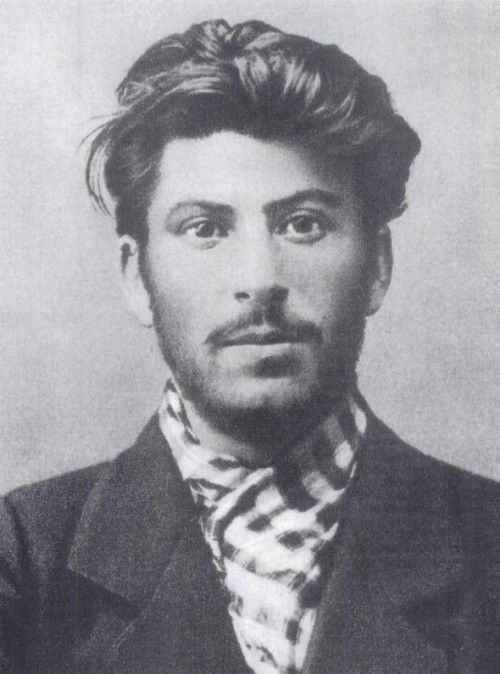
I just finished reading a biography of Stalin’s early years—from his birth through the October Revolution, when he became People’s Commissar of Nationalities. It was an enlightening account of an enigmatic man.


Few people would disagree with labeling Stalin one of history’s greatest monsters. He killed millions directly by dictatorial order, and he killed millions more indirectly by policy. He repressed speech, thought, and art. He didn’t care for human life or human dignity if they hindered his political ends. 

This is the sketch we get in school or on Wikipedia, and it’s not untrue. He was indeed terrible—so terrible that it’s hard to imagine how someone like him could come into existence. Reading a more thorough portrait of him only complicates the puzzle. You see that he existed in three dimensions like the rest of us.

That’s not to say the details of his personal life reveal him to have been a good man. Aside from being a political mass murderer, he was also a womanizer, a thief, a cold son, and a negligent husband and father. But there are also details that reveal an incongruously human side. He loved nature. He was a talented and avid poet. Throughout his life he was acclaimed as a beautiful singer by everyone who knew him. What struck me most of all was that, as the author put it, Stalin became later in his life “a keen gardener, growing lemons, tomatoes, and, above all, roses and mimosas.”

It’s strange to think of the supreme Soviet dictator placidly clipping his rose bushes while one of his deputies summarily executes a suspected conspirator in the basement of the Lubyanka. How do you reconcile those things? Shouldn’t Stalin have spent all his time brooding in the Kremlin while he looked out the window at a gray and rain-dampened Moscow? That would certainly give us a more consistent picture of the man. 

One of the hardest things to remember when reading history is that every name you read once belonged to a human being. History often makes people like Stalin seem more like characters—larger than life and and on a different plane of existence. It’s startling to see them humanized and exhibiting qualities that might—god forbid—connect them to regular folk like us. 

Those tender human qualities actually make the Stalin’s and Hitler’s of history more frightening rather than less. They make it harder to call them evil. They blur what we might think of as warning signs of future tyrants. Stalin’s family and childhood friends identified him as a uniquely charismatic leader with some kind of destiny in store for him, but no one predicted he would unleash more violence on his own people than anyone before him. He wasn’t torturing cats or anything. 

A young Stalin is impossible to pick out of a crowd. Who knows when there might be another like him?


Wednesday, January 4, 2012

Life on the map

I didn’t have much work to do today, so I spent a lot of time daydreaming about airline miles I’m going to accrue on business trips over the next few months and how I’m going to use them. I’ll have a free round-trip ticket to a fairly distant destination. 

My daydreaming included a lot of poring over airline route maps, seeing where I could go and for how much. Map-gazing is an intoxicating activity, one I could do for hours on end. I was almost salivating today while doing it.


I know I’m not the only one who loves maps like this. In his early teens, my brother would nearly memorize the map of every backpacking trip we took. Elevation gain and loss, river crossings, campsites—he knew it all. He knew the name of the rock you just took a piss off of.

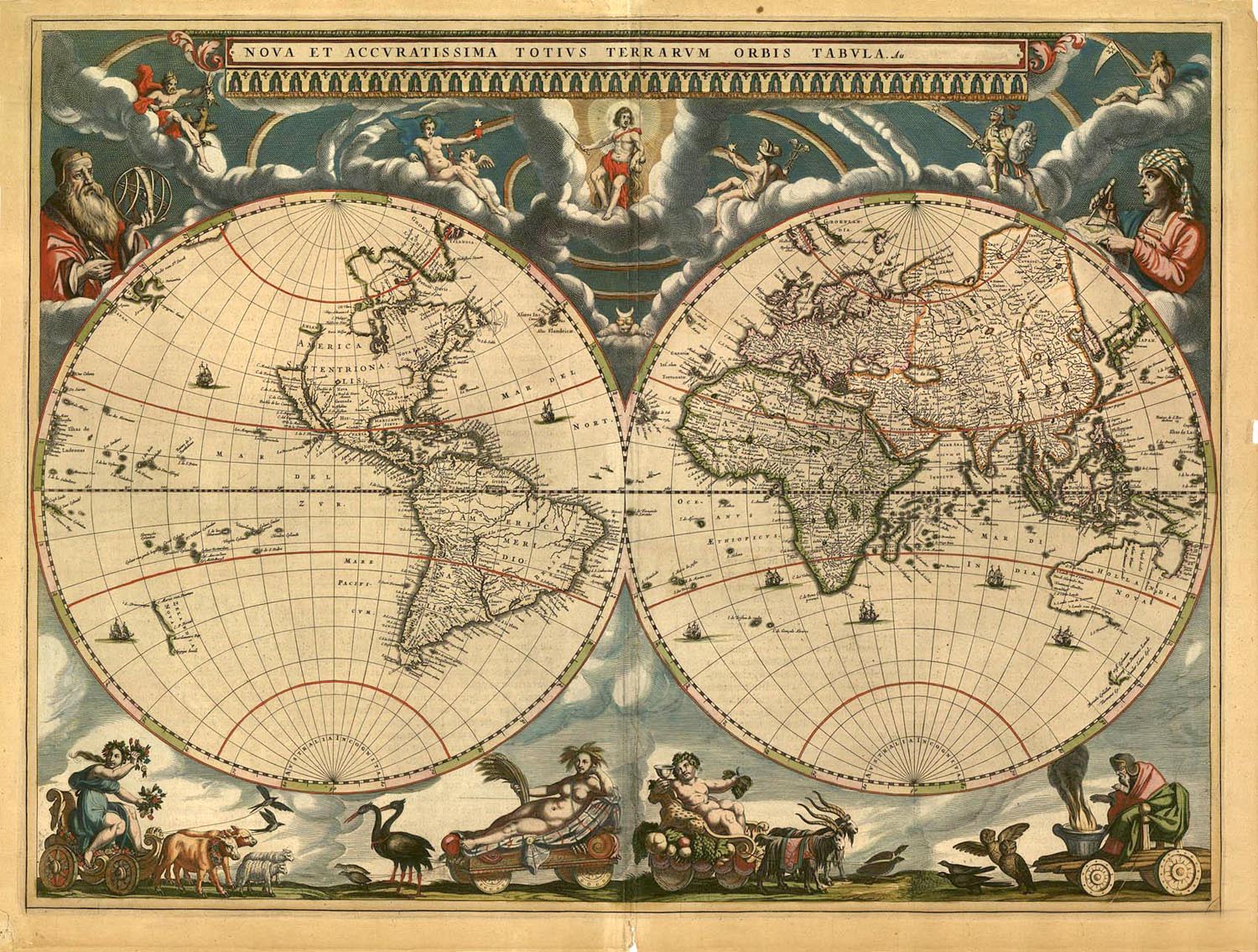
It’s funny maps should draw anyone in like this, because they’re manifestly unromantic. At least in contemporary atlases (not so a few hundred years ago), maps are more documentation than artwork. They’re meant to get the job done—to represent the data accurately.

The fascination comes from the way they allow you to so easily imagine yourself moving through them. Photos of a place are exciting, too, but a map provides an idea of continuity. On a map you get to envision a journey, whereas with photos you only envision a destination. 

I look at maps of places I want to go, and I see a red dotted line marking my movement, just like in a movie from the ‘40s or ‘50s. It all seems impossibly easy. Getting from Istanbul to Rajasthan? All you have to do is wiggle your way down a few train tracks, maybe stopping for tea in Tehran and making a side trip for caviar in Baku. The OneWorld Alliance maps I was looking at are even more enticing. Vancouver and Hong Kong are connected by a straight line! How hard is it to travel down a straight line? You could do it this weekend.

Once I make definite plans to go somewhere, the map becomes my idea of the place. This always leads to surprises. I imagine that when I arrive, the experience of standing on the ground will be qualitatively different. I imagine the nature of the geography will be somehow more evident. I thought that on Sumatra I would sense I was on an island. I thought that in Thailand I would know I was in a really oddly shaped country. I thought that in Seoul I would feel the presence of the dark, backward state just north of me.

So I’m surprised whenever I arrive somewhere and realize it’s an actual place. It has the same gravity, the same distances, and the same curvature of the Earth as back home. The horizon is no closer. Having daydreamed so much over the map, I had gotten the impression I would be spending the trip observing myself from above. It’s a nice surprise, of course, since a map can’t be as interesting as the details on the ground. But it shocks me into remembering how big a place the world actually is.    


Tuesday, January 3, 2012

No, really, how is it going?

I am an abject failure at the “How’s it goin’?” game. It’s a standard feature of most offices. You pass someone in the hall (maybe someone you know, maybe someone you don’t), you give a perfunctory smile and a slight arch of the eyebrows and say, “How’s it goin’?” It’s actually said more like one word, and more like a statement than a question: howzitgoin. 

Maybe it’s only a standard feature in casual West Coast offices. I imagine that in East Coast offices they either grimace at each other or undress one another with their eyes as they pass. That’s the impression I’ve gotten from film and television, anyway. And my understanding is that between the coasts they all grow corn for a living, so they don’t have to worry about it.

I’m not cut out to play the Howzitgoin game. I don’t think I’m designed for it. When I’m walking through the halls at work, I’m typically lost in some thought about what I’m going to eat for dinner that night or what I’d like to look up next on Wikipedia. I’m not ready for quick-start socializing. If someone’s going to talk to me, I prefer to have a few hours’ warning.

So I never say the right thing. Sometimes a guy will give me a howzitgoin and I just say, “Hey man.” Oh shit, I think immediately after, maybe he was expecting a real answer and a return howzitgoin. Ah, but he only mumbled his howzitgoin anyway, so I’m sure he wasn’t. But wait, maybe he was!

Of course, there are variations on the theme of the Howzitgoin game. There’s the howeryou, the whatsappenin, and the howyadoin. The last of these I’m totally unprepared for. I didn’t grow up with howyadoin. It sounds sort of New York-ish to me. So when I’m blindsided by a howyadoin, my response is a garbled mishmash of all the possible responses one could give to the various themes of the Howzitgoin game: “Good! How’s—your . . . uh . . . doing?” Fuck, I hope she thinks I’m boring and was only asking that to be nice and wouldn’t waste her time listening to my idiotic answer.

I can’t decide how I feel about getting a howzitgoin without my name included. On the one hand, getting a bare “Howzitgoin” seems callously impersonal. It only underscores how routine the exchange is. But on the other hand, getting a “Howzitgoin, Dan” makes me feel obligated to respond with the other person’s name.  And I can’t think that fast. In the fight-or-flight state induced by receiving a howzitgoin, my mind turns Jack’s into John’s and Andy’s into Amy’s. So I mumble something like, “Good, Perdle, how’s are you?” getting maybe the first letter and the number of syllables correct. Fuck, I hope that guy doesn’t remember what his name is. 

Even worse are the fake-out howzitgoins. Sometimes I’ll be walking toward someone who’s otherwise occupied (maybe sending a text message or reading a sheet of paper). He looks up just at the last moment we could possibly make eye contact, and I give a brief smile and nod, thinking I’m going to get away with only that. But then, after our shoulders have already passed, I hear a howzitgoin. At this point I’m already celebrating having avoided a howzitgoin, so my mind has to switch gears rapidly. I have to think up a response, while walking and doing a little half-turn, then project my voice since this guy is now 10 feet past me, and all I can get out is a low, feral sound like “Eghhhhhh.” You just made me do an off-balance howzitgoin, asshole. Rude.

But worst of all are the change-ups. There are some people who howzitgoin me all the time, so I know to expect it from them. I’ll see someone come around the corner of the hall fifty feet ahead of me. Okay, I think, here it comes. I’m ready to respond. I can smell the howzitgoin before it’s uttered. We keep walking toward each other. Finally we make eye contact. But she changes up on me and says, “Hi, Dan.” I’m so keyed up at this point, though, that I just blurt out, like a fucking automaton: “PRETTY GOOD, HOW ARE YOU?!”

Swing and a miss. Shit.


Sunday, January 1, 2012

Learning to write, the college way

University English programs claim to teach students how to write. I think they do a pretty bad job of it. I just read through some of my old college essays, and they are an utter embarrassment. It’s not so much that they’re poorly written as it is that they’re full of absurdly contrived subject matter. Nathaniel Hawthorne’s representation of Puritanism in “Young Goodman Brown?” My God, why would anyone want to write or read about that?

Reading one of my blog writings next to one of my college essays, you might think they were written by different people. The whole tone of the college essays is wrong. They’re pedantic and overstated. They’re vague and indirect. They’re banal.

The reason these essays are so bad is simple: I didn’t believe in what I was writing. I doubt many English students do. We wrote those essays for a select and peculiar audience: career academics. Our instructors often told us to “add to the conversation” around a particular novel. Well, those academic conversations around novels were conversations most of us would never have in our regular lives, even with intellectual friends who liked literature. So we faked it.

This is terrible training if they want us to actually become writers, because the only writing that ordinary people will spend their precious free time reading is writing that comes from the heart. Insincerity comes through in print as strongly as it does in speech. People want to read honest voices. And our voices in college essays were rarely that. Could you write 1300 honest words about the symbolism and imagery of the first two minutes of Blade Runner? Well, neither could I, but I wrote those 1300 words anyway, and the result is something I now wouldn’t read unless you paid me. 

The most striking thing about my old essays is how overloaded with words they are. They’re bursting with needless adjectives and adverbs. Again, the reason is simple: I had to meet the page count. Most of the ideas in those essays were pretty small, so I had to create an illusion of size.

The mandatory page count (or word count) is one of the big mistakes college instructors make in teaching us to write. It makes students dependent in their thinking and inept in judging the quality of their ideas. There’s no reason that an essay should be a particular length. Some important ideas can be explained in 300 words. Some require 3000. Students should be allowed to judge for themselves when they’ve said something worthwhile. They’ll be mistaken sometimes, but they’ll learn from it.

If you think English students aren’t dependent on page count requirements, imagine giving them an assignment without any. You tell the class, “Give me an essay with one or more interesting ideas in it, explained in depth, and connected to other topics you think are relevant.” If you left it at that, you’d have a room full of panicked kids. But how long is it supposed to be? How will I know when I’ve written enough? How much of our grade is it worth? 

The sad truth is that students use the minimum page count as a baseline for ensuring a passing grade. If you write in complete sentences and meet the minimum page count, you can usually rest easy that you’ll at least get a C. English students don’t get too bent out of shape about bullshitting flimsy ideas in the interest of padding a paper. They know it almost always flies. The minimum page count provides security.

Some English majors outgrow this dependency and learn to be their own judges, but I still think paper padding is a bad habit to instill in them. People like concise language. We might as well get young writers writing that way as early as possible.

So what’s the solution? Basically, to completely restructure college writing instruction. Literary criticism is mostly a farce. It’s written by academics for academics. It’s inbred, and irrelevant to people outside that cloistered sphere. So why are we teaching college kids to write it? Writing instruction should allow students to write about the ideas that interest them. Those ideas could come from anywhere.

There’s no point in graduating a class of students who are well-trained in writing half-heartedly. Allowing students more freedom in choosing their subjects would make their work more difficult to judge. Doing away with page minimums would make it even harder. But I think college English departments either need to do those things or drop the pretense that they’re really teaching anyone to write.